
DECKS & OUTDOOR LIVING
Is Composite Decking Worth the Cost?
If you’re planning a new deck in the Kalamazoo area, you’ve probably asked the same question most homeowners do: treated wood or composite?
QUICK ANSWER
For homeowners who want less maintenance and long-term durability, composite is often worth the higher upfront cost.
Treated wood costs less initially, while composite reduces much of the staining, sealing, splintering, and ongoing upkeep associated with a traditional wood deck.
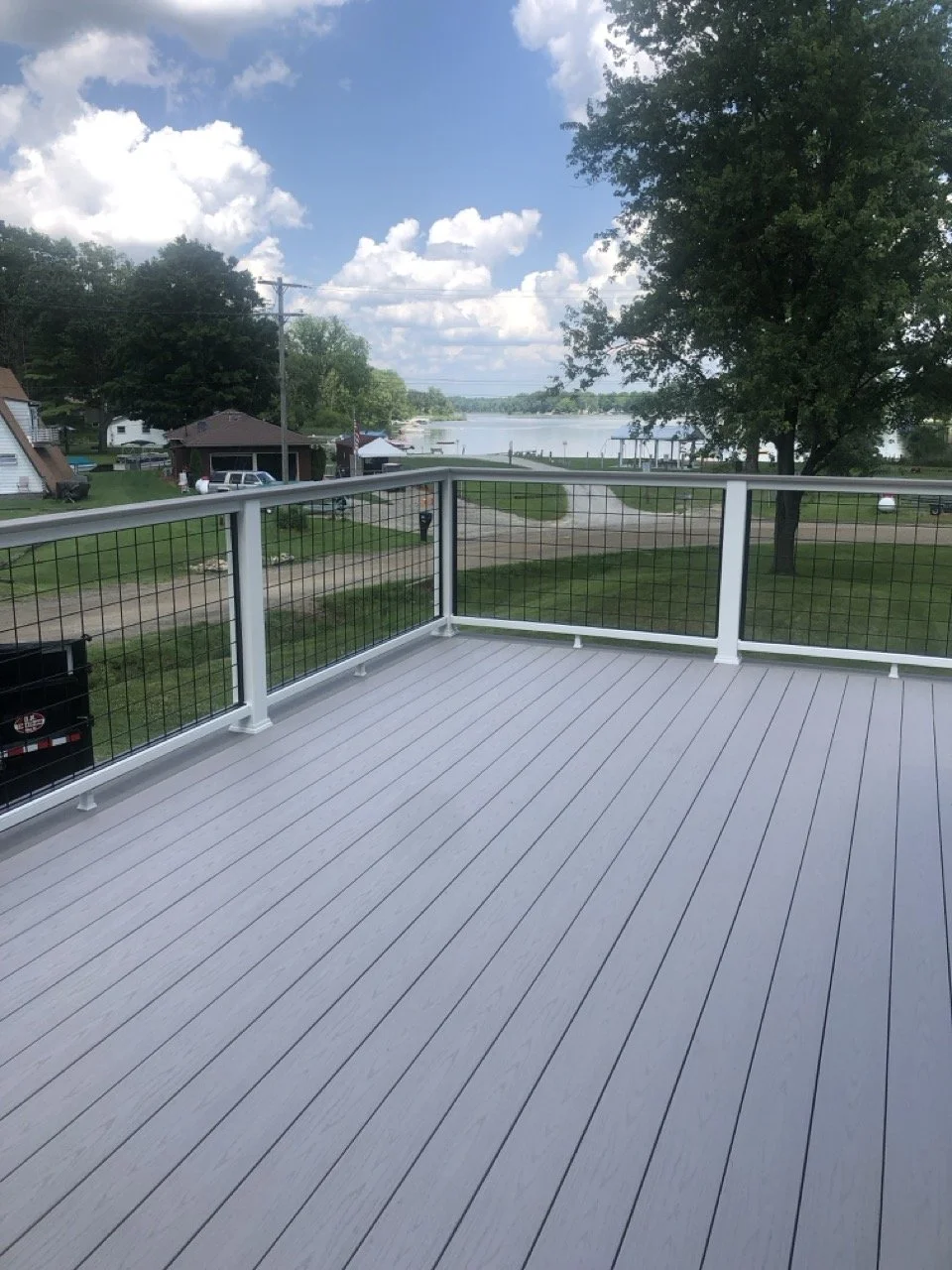
Less Work, More Weekends
If you’ve owned a wood deck, you already know the work doesn’t end once it’s built.
Wood needs regular staining or sealing to protect it from moisture. When maintenance is delayed, boards can begin cracking, splintering, cupping, or twisting.
Composite decking doesn’t need staining, sealing, or sanding. Routine cleaning usually requires little more than a hose, detergent, and an occasional mildew cleaner in damp or shaded areas.
That means more time enjoying your deck and fewer weekends spent maintaining it.
Why Homeowners Choose Composite
-
Less Maintenance
No staining, sealing, or sanding. Just simple cleaning when needed.
-
A Cleaner Finish
Hidden fasteners and plug systems create a polished surface without rows of exposed screws.
-
Long-Term Durability
Quality composite is designed to resist moisture, fading, and everyday wear.
-
More Design Options
Mix colors, borders, and contrasting details to create a custom look.
Before You Choose…
The Upfront Cost
Composite decking costs more upfront than treated wood. How much more depends on the product, deck design, and installation.
What you’re paying for is less ongoing maintenance, no regular staining or sealing, and a surface designed to hold up for decades.
For many homeowners, the decision comes down to paying less now or doing less maintenance later.
What About the Heat?
Heat is one legitimate concern with composite decking. All decking materials can warm in direct sunlight, and darker colors generally feel hotter.
For sun-exposed decks, we may recommend select TimberTech Advanced PVC products, which are designed to retain less heat. Certain colors can stay up to 30 degrees cooler than many traditional composite products.
The deck’s location, sun exposure, and color should all be considered when choosing the right material.
What’s Underneath Matters, Too
A long-lasting deck surface is only as good as the structure supporting it.
Before installing composite, we evaluate the existing framing rather than covering aging or compromised materials just to reduce the initial cost.
When rebuilding, we also install flashing tape over the joists to help protect the structure from moisture. These details aren’t always visible when the project is finished, but they make a real difference in how the entire deck performs over time.
Frequently Asked Questions
Wondering What’s Right for Your Home?
Wood and composite each come with different advantages. The right choice depends on your budget, how much maintenance you want to take on, and how you plan to use the space.
We’ll help you compare the options and choose a material that makes sense for your home.
-
Yes. Composite decking has a higher upfront cost than treated lumber. The exact difference depends on the product, deck design, framing needs, and installation. The tradeoff is less ongoing maintenance and a longer-lasting finished surface.
-
Sometimes, but only if the existing framing is structurally sound. We evaluate the structure before installing new decking rather than covering aging or compromised materials that may not last as long as the new surface.
-
Traditional composite decking generally has an estimated lifespan of approximately 25 to 30 years. Advanced PVC products may last 50 years or more. The actual lifespan depends on the product, installation, surrounding conditions, and structure supporting it.
-
A straightforward deck may be completed in under a week. Larger or more detailed decks with extensive stairs, railings, or multiple levels can take several weeks. The final timeline depends on the size, design, site conditions, and scope of work.
So, Is Composite Decking Worth It?
Composite is what we recommend most often for homeowners who want a beautiful, long-lasting deck without another annual maintenance project.
But the decking boards are only part of the equation. Proper framing, moisture protection, and installation are just as important as the material you choose.
Treated wood can still be a practical choice for homeowners working with a tighter upfront budget. The right decision comes down to how much maintenance you want to take on, how long you want the deck to last, and what makes sense for your home.
Premier Building & Remodeling has been building decks in the Kalamazoo area for more than 30 years. We can help you compare the materials, design, and construction details behind a deck that fits your home.
Thinking About a New Deck?
Let’s talk through the materials, design, and construction details that make sense for your home.